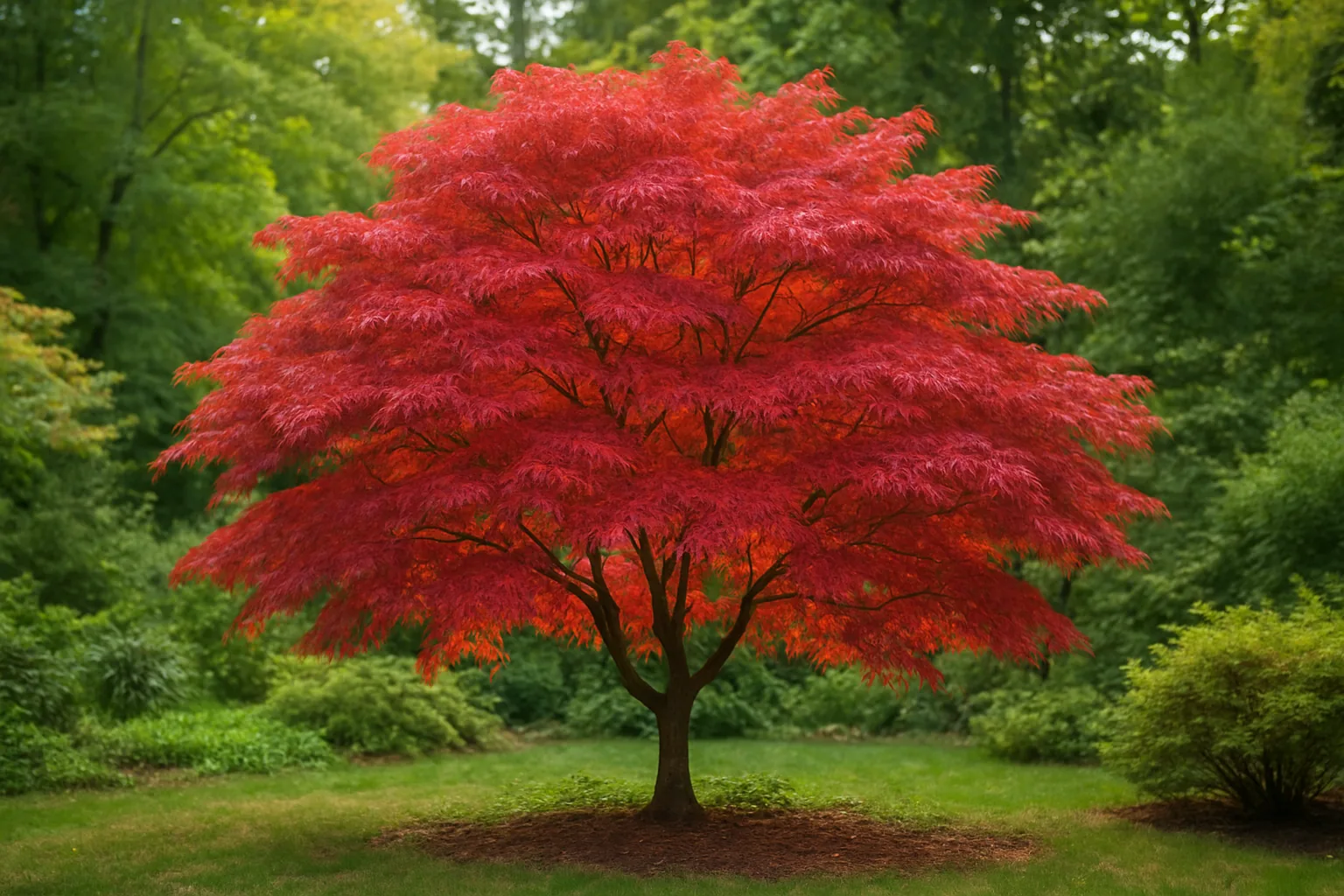
Japanese Maple (*Acer palmatum*) is a deciduous tree prized for its stunning foliage and elegant form, often grown for its vibrant autumn colors and landscape enhancement.
Overview
Japanese Maple, known botanically as *Acer palmatum*, is a deciduous tree celebrated for its exquisite foliage and graceful form. Gardeners grow it for its vibrant autumn colors and its ability to enhance any landscape with its elegant appearance.
Quick Care Facts
| Sun Needs | Soil Type | Watering Needs | Mature Size | Bloom/Harvest Time | Hardiness Zone | Indoor/Outdoor |
|---|---|---|---|---|---|---|
| Partial Shade | Well-drained | Medium | 4–8 m | Autumn Color | 5–8 | Outdoor |
Growing Instructions
- When and Where to Plant: Plant Japanese Maples in early spring or autumn. Choose a location with partial shade to protect from harsh sun and wind.
- How to Plant: Dig a hole twice as wide and as deep as the root ball. Place the tree in the hole, backfill with soil, and water thoroughly.
- Spacing: Allow at least 2–3 meters between trees to accommodate mature size.
- Watering: Keep the soil consistently moist, especially during dry spells, but avoid waterlogging.
- Fertilizing: Apply a balanced, slow-release fertilizer in early spring.
- Pruning: Prune in late winter to maintain shape and remove dead or crossing branches.
- Seasonal Care: Mulch around the base in winter to protect roots from frost.
Problems & Solutions
- Yellow Leaves: Often caused by overwatering or poor drainage. Ensure soil is well-drained and adjust watering schedule.
- Pests: Aphids and scale insects can be treated with insecticidal soap or neem oil.
- Diseases: Verticillium wilt can occur; improve soil drainage and remove affected branches.
- Wilting: Check for root rot; improve drainage and reduce watering.
- No Flowers: Japanese Maples are grown for foliage, not flowers, but ensure proper sunlight and nutrients for overall health.
- Root Rot: Prevent by ensuring well-drained soil and avoiding overwatering.