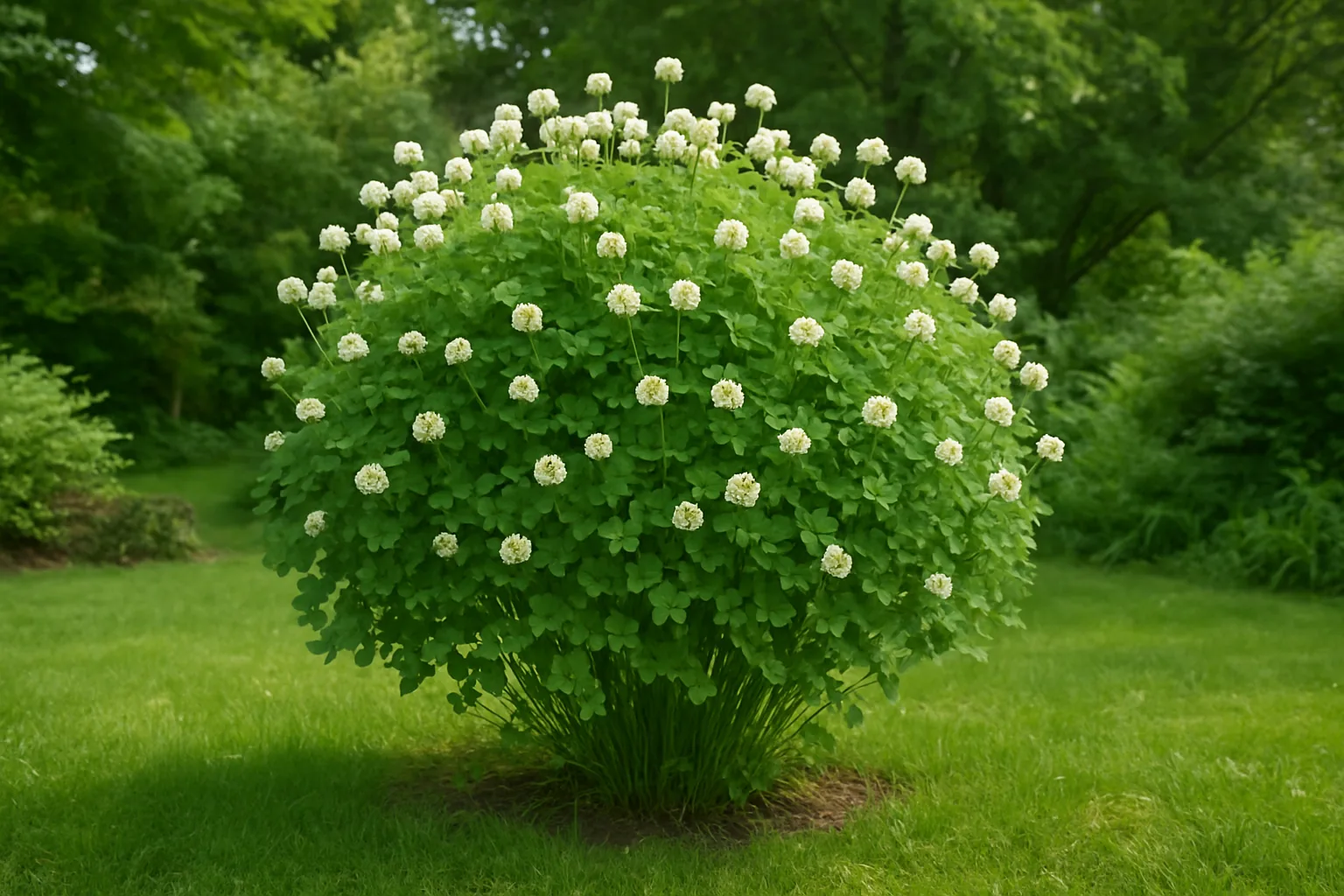
A clover lawn, primarily composed of White Clover (*Trifolium repens*), is a low-maintenance groundcover that enriches soil and attracts pollinators.
Overview
Clover lawns are popular for their nitrogen-fixing ability, which naturally enriches the soil and reduces the need for fertilizers. Gardeners appreciate clover lawns for their low maintenance, drought tolerance, and the ability to attract beneficial pollinators like bees.
Quick Care Facts
| Requirement | Details |
|---|---|
| Sun Needs | Partial shade to full sun |
| Soil Type | Well-drained, loamy soil |
| Watering Needs | Low; drought-tolerant |
| Mature Size | Typically 10–20 cm in height |
| Bloom Time | Late spring to early summer |
| Hardiness Zone | 3–10 |
| Indoor/Outdoor | Outdoor |
Growing Instructions
- When to Plant: Sow clover seeds in early spring or early autumn.
- Where to Plant: Select a location with partial shade to full sun.
- How to Plant: Evenly scatter seeds over prepared soil and lightly rake them in.
- Spacing: Aim for even coverage without precise spacing.
- Watering: Water lightly after planting and during dry spells.
- Fertilizing: Typically unnecessary due to its nitrogen-fixing capacity.
- Pruning: Mow occasionally to maintain desired height.
- Seasonal Care: Minimal care required; overseed bald patches as needed.
Problems & Solutions
- Yellow Leaves: Often caused by poor soil drainage. Improve drainage by aerating the soil.
- Pests: Manage aphids with insecticidal soap.
- Diseases: Control fungal issues by ensuring good air circulation.
- Wilting: Generally a sign of underwatering; increase watering frequency.
- No Flowers: This may happen if mowed too frequently; allow some growth before mowing.
- Root Rot: Prevent by avoiding overwatering and ensuring well-drained soil.
Häufig gestellte Fragen
1. Kann ich Klee in einem schattigen Garten pflanzen?
Ja, Klee wächst gut in Halbschatten bis voller Sonne.
2. Wie oft sollte ich meinen Klee-Rasen mähen?
Mähen Sie bei Bedarf, um die gewünschte Höhe zu halten.
3. Ist Klee resistent gegen Trockenheit?
Ja, Klee ist sehr trockenheitsresistent.
4. Braucht Klee Dünger?
Nein, Klee benötigt in der Regel keinen Dünger, da er Stickstoff fixiert.
5. Wann blüht Klee?
Klee blüht normalerweise von Spätfrühling bis Frühsommer.