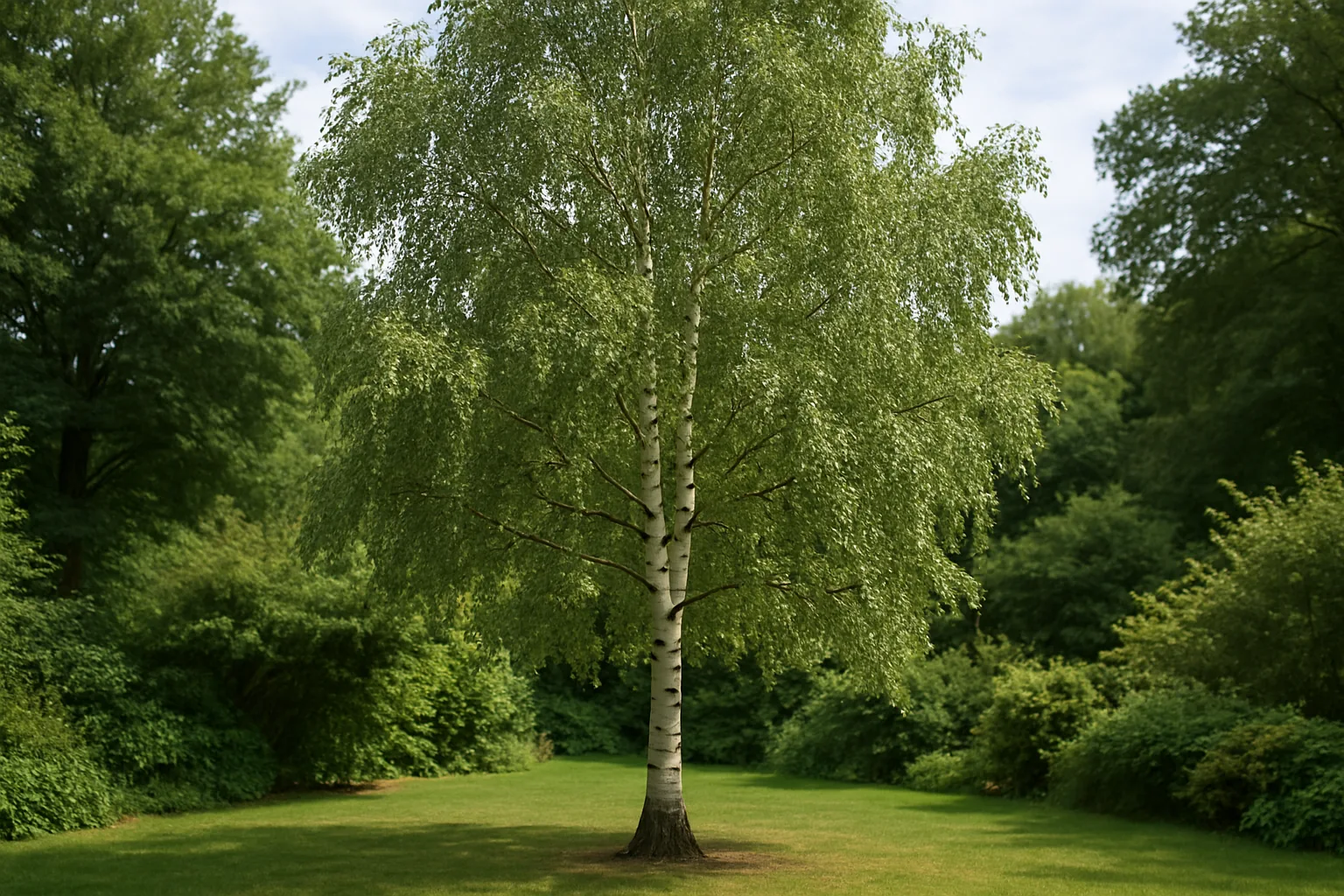
Birch trees, from the genus *Betula*, are deciduous trees known for their striking bark and graceful appearance, often chosen for ornamental purposes.
Overview
Birch trees, commonly referred to as birch, belong to the genus *Betula*. These deciduous trees are celebrated for their unique white or silver bark and delicate, airy foliage. Gardeners frequently plant birches for their ornamental value and adaptability to various landscapes.
Quick Care Facts
| Sun Needs | Soil Type | Watering Needs | Mature Size | Bloom/Harvest Time | Hardiness Zone | Indoor/Outdoor |
|---|---|---|---|---|---|---|
| Full Sun | Well-drained | Moderate | 10–15 m | Spring | 2–7 | Outdoor |
Growing Instructions
- When to Plant: Plant birch trees in early spring or fall when the soil is moist and temperatures are moderate.
- Where to Plant: Select a site with full sun exposure and well-drained soil. Avoid locations with standing water.
- How to Plant: Dig a hole twice the width of the root ball and as deep as the root ball's height. Position the tree, backfill with soil, and water thoroughly.
- Spacing: Allow 3–6 meters between trees to accommodate their mature size.
- Watering: Water young birches weekly during dry spells. Mature trees require less frequent watering.
- Fertilizing: Use a balanced fertilizer in early spring to support growth.
- Pruning: Prune in late winter to remove dead or crossing branches, promoting healthy structure.
- Seasonal Care: Apply mulch in spring to conserve moisture and protect roots.
Problems & Solutions
- Yellow Leaves: Typically caused by water stress or poor drainage. Ensure consistent watering and improve soil drainage.
- Pests: Common pests include birch leaf miner and bronze birch borer. Treat with insecticidal soap or neem oil as necessary.
- Diseases: Look for leaf spots or cankers. Prune affected branches and apply fungicides if needed.
- Wilting: Often a sign of root rot; enhance drainage and reduce watering frequency.
- No Flowers: Ensure the tree receives adequate sunlight and avoid over-fertilizing.
Häufig gestellte Fragen
1. Wann sollte ich eine Birke pflanzen?
- Pflanzen Sie Birken im frühen Frühling oder Herbst, wenn der Boden feucht und die Temperaturen moderat sind.
2. Wie oft sollte ich meine Birke gießen?
- Junge Bäume sollten wöchentlich während trockener Perioden gegossen werden, während ältere Bäume weniger häufiges Gießen benötigen.
3. Welche Schädlinge greifen Birken an?
- Häufige Schädlinge sind der Birkenblattminer und der Bronzebirksplintkäfer.
4. Warum werden die Blätter meiner Birke gelb?
- Gelbe Blätter können durch Wasserstress oder schlechte Entwässerung verursacht werden.
5. Kann ich eine Birke in einem Topf ziehen?
- Birken sind am besten im Freien gepflanzt, da sie viel Platz für Wurzeln und Wachstum benötigen.