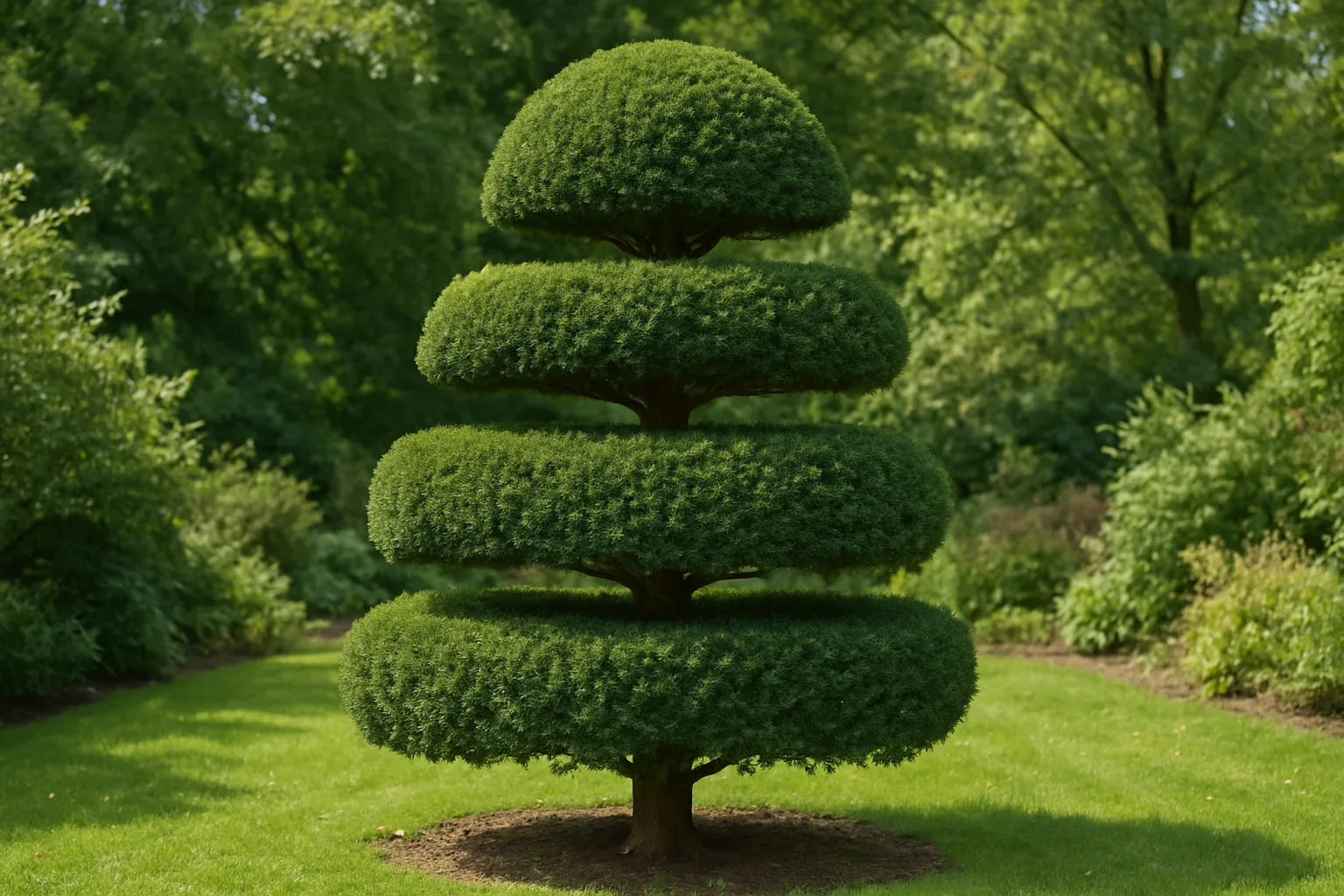
Yew topiary, a versatile evergreen shrub, is favored for its dense foliage and ability to be shaped into various decorative forms.
Overview
Common Name: Yew Topiary
Botanical Name: Taxus spp.
Plant Type: Evergreen Shrub
Main Features: Dense foliage, versatile shapes, long-lived
Why Grow It: Yew topiary is prized for its ability to be shaped into various decorative forms, making it a popular choice for formal gardens and landscape design.
Quick Care Facts
| Requirement | Details |
|---|---|
| Sun Needs | Partial shade |
| Soil Type | Well-drained, slightly acidic |
| Watering Needs | Moderate |
| Mature Size | 1–2 meters tall |
| Bloom/Harvest Time | Late spring (non-showy) |
| Hardiness Zone | 4–7 |
| Indoor/Outdoor | Outdoor |
Growing Instructions
- When to Plant: Plant yew topiary in early spring or fall when temperatures are mild.
- Where to Plant: Choose a location with partial shade and well-drained soil.
- How to Plant: Dig a hole twice the width of the root ball and as deep. Place the plant in the hole, backfill with soil, and water thoroughly.
- Spacing: Space plants 60–90 cm apart to allow for growth and air circulation.
- Watering: Water regularly during the first growing season to establish a deep root system. Thereafter, water when the topsoil feels dry.
- Fertilizing: Apply a balanced fertilizer in early spring.
- Pruning: Prune in late winter or early spring to maintain shape. Remove dead or damaged branches.
- Seasonal Care: Apply mulch in winter to protect roots in colder climates.
Problems & Solutions
- Yellow Leaves: Often due to poor drainage or overwatering. Improve soil drainage and reduce watering.
- Pests: Common pests include scale and spider mites. Use insecticidal soap or neem oil to treat infestations.
- Diseases: Root rot is a risk in poorly drained soil. Ensure good drainage and avoid overwatering.
- Wilting: Check for root damage or pests. Adjust watering practices and inspect roots.
- No Flowers: Yews are not known for their flowers; focus on foliage health.
Häufig gestellte Fragen (FAQs)
1. Kann ich Eiben-Topiary drinnen anbauen?
Eiben-Topiary eignet sich besser für den Außenbereich, da es viel Platz und Licht benötigt.
2. Wie oft sollte ich meine Eiben-Topiary gießen?
Gießen Sie regelmäßig während der Wachstumsperiode und reduzieren Sie die Bewässerung im Winter.
3. Was tun bei gelben Blättern?
Überprüfen Sie die Bodenentwässerung und passen Sie die Bewässerung an.
4. Wie oft sollte ich düngen?
Düngen Sie einmal im Frühjahr mit einem ausgewogenen Dünger.
5. Wann sollte ich meine Eiben-Topiary beschneiden?
Beschneiden Sie im späten Winter oder frühen Frühling, um die Form zu erhalten.
6. Welche Schädlinge befallen Eiben-Topiary?
Häufige Schädlinge sind Schildläuse und Spinnmilben, die mit Neemöl behandelt werden können.