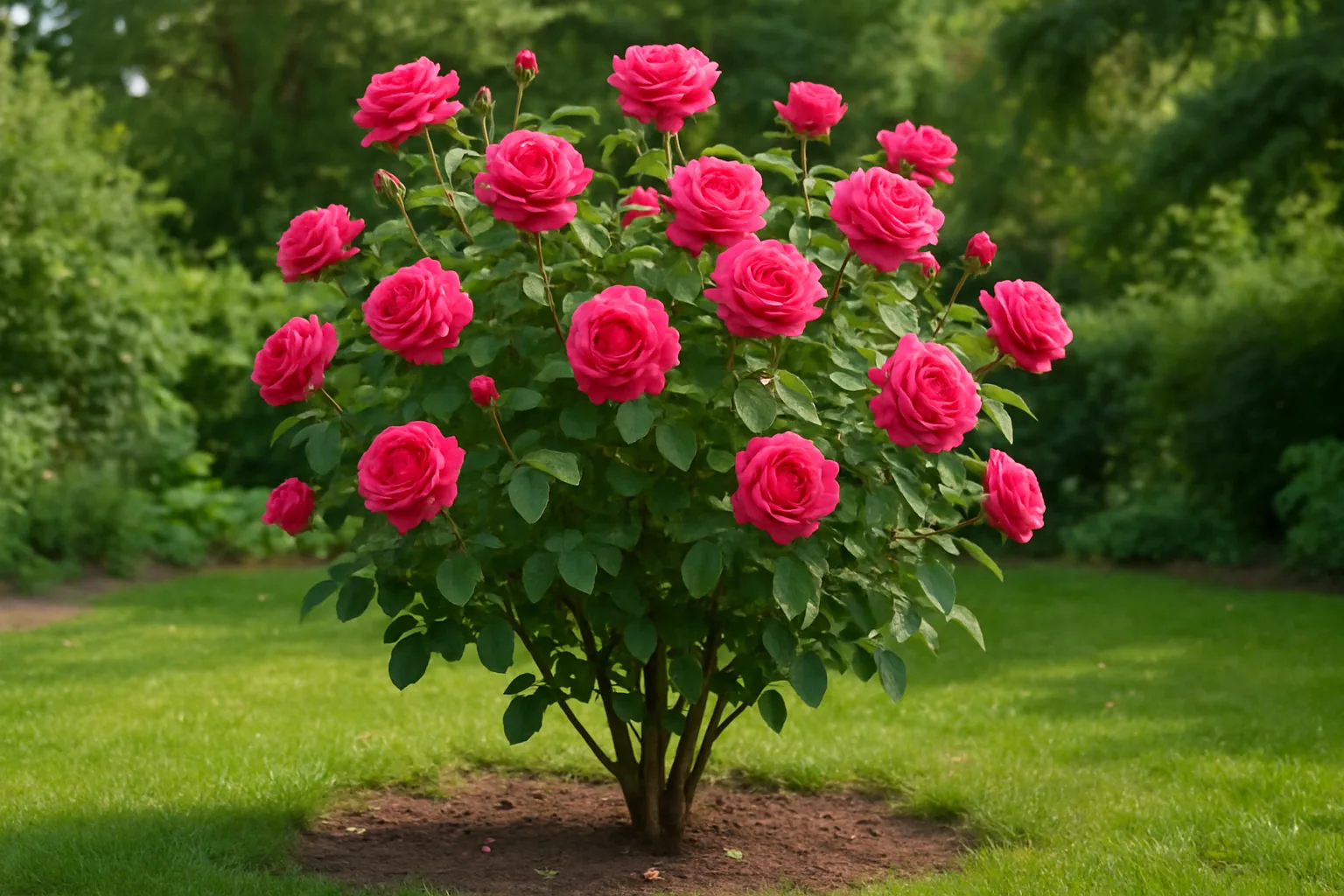
Roses, or Rosa, are perennial plants known for their beautiful blooms and fragrant aroma, thriving best in full sun with well-drained soil.
Overview
- Common Name: Rose
- Botanical Name: Rosa
- Plant Type: Perennial
- Main Features: Roses are cherished for their stunning blooms, diverse colors, and fragrant aroma. They are grown for ornamental purposes and as cut flowers.
Quick Care Facts
| Requirement | Details |
|---|---|
| Sun Needs | Full sun |
| Soil Type | Well-drained, loamy |
| Watering Needs | Moderate |
| Mature Size | 1–2 m tall, 1–2 m wide |
| Bloom Time | Spring to autumn |
| Hardiness Zone | 4–9 |
| Indoor/Outdoor | Outdoor |
Growing Instructions
1. When and Where to Plant: Plant roses in early spring or autumn in a location that receives at least 6 hours of sunlight daily. Avoid areas with poor drainage.
2. How to Plant: Dig a hole twice the width of the root ball. Place the rose at the same depth it was growing in its container. Fill with soil and water thoroughly.
3. Spacing: Space plants 60–90 cm apart to ensure good air circulation.
4. Watering: Water deeply once a week, allowing the soil to dry slightly between waterings.
5. Fertilizing: Use a balanced fertilizer in early spring and again in mid-summer.
6. Pruning: Prune in late winter or early spring before new growth. Remove dead or diseased wood and shape the plant.
7. Seasonal Care: Mulch in spring to retain moisture and suppress weeds. Protect from harsh winter weather with a layer of mulch or burlap.
Problems & Solutions
- Yellow Leaves: Often caused by overwatering or poor drainage. Improve drainage and reduce watering frequency.
- Pests: Aphids and spider mites can be controlled with insecticidal soap or neem oil.
- Diseases: Black spot and powdery mildew can be prevented by ensuring good air circulation and using fungicides if necessary.
- Wilting: Check for underwatering or root rot. Adjust watering practices.
- No Flowers: Ensure adequate sunlight and use a high-phosphorus fertilizer.
- Root Rot: Improve soil drainage and avoid overwatering.