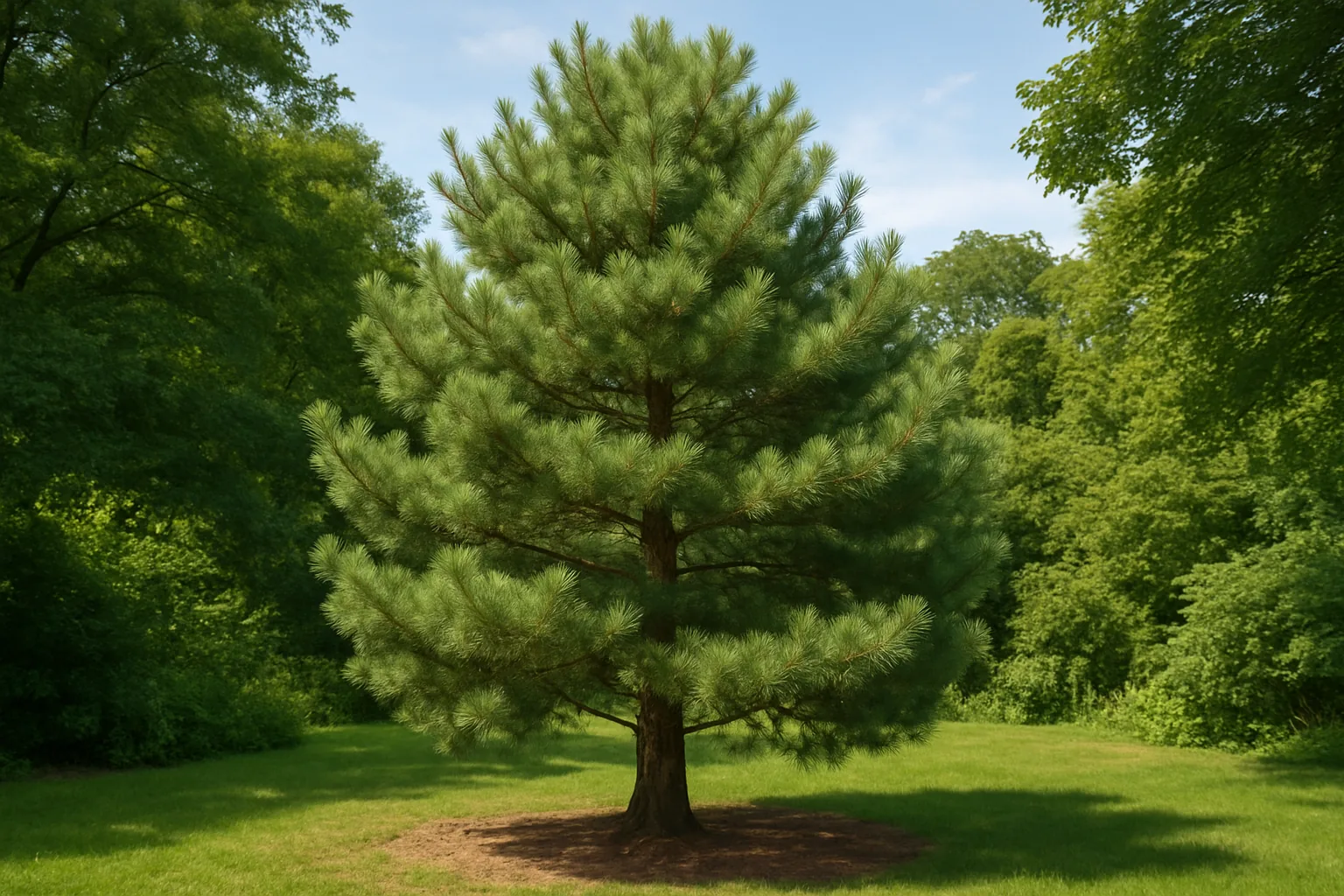
Pine trees, or *Pinus*, are evergreen conifers valued for their needle-like leaves and resilience, making them popular for shade and landscape beauty.
Overview
Pine trees, known botanically as *Pinus*, are evergreen conifers appreciated for their needle-like leaves and adaptability. Gardeners grow them for their aesthetic appeal, shade, and resilience in various climates.
Quick Care Facts
| Sun Needs | Soil Type | Watering Needs | Mature Size | Hardiness Zone | Indoor/Outdoor |
|---|---|---|---|---|---|
| Full Sun | Well-drained | Low | 15–30 m | 3–8 | Outdoor |
Growing Instructions
1. When and Where to Plant:
- Plant pine trees in spring or early autumn.
- Choose a location with full sun and well-drained soil.
2. How to Plant:
- Dig a hole twice as wide and as deep as the root ball.
- Place the tree in the hole, ensuring the root flare is level with the ground.
- Backfill with soil and water thoroughly.
3. Spacing:
- Space trees 3–6 meters apart, depending on the species.
4. Watering:
- Water newly planted trees regularly until established. Mature trees require minimal watering.
5. Fertilizing:
- Fertilize in early spring with a balanced, slow-release fertilizer if soil is poor.
6. Pruning:
- Prune dead or diseased branches in late winter.
7. Seasonal Care:
- Apply mulch around the base to retain moisture and control weeds.
Problems & Solutions
- Yellow Leaves: Often caused by poor drainage or nutrient deficiency. Improve soil drainage and test soil pH.
- Pests: Treat with appropriate insecticides if pests like pine beetles are present.
- Diseases: Fungal diseases can be treated with fungicides and by removing affected branches.
- Wilting: Ensure adequate watering, especially in dry periods.
- No Flowers: Pines do not flower; they produce cones instead.
- Root Rot: Ensure well-drained soil; avoid overwatering.