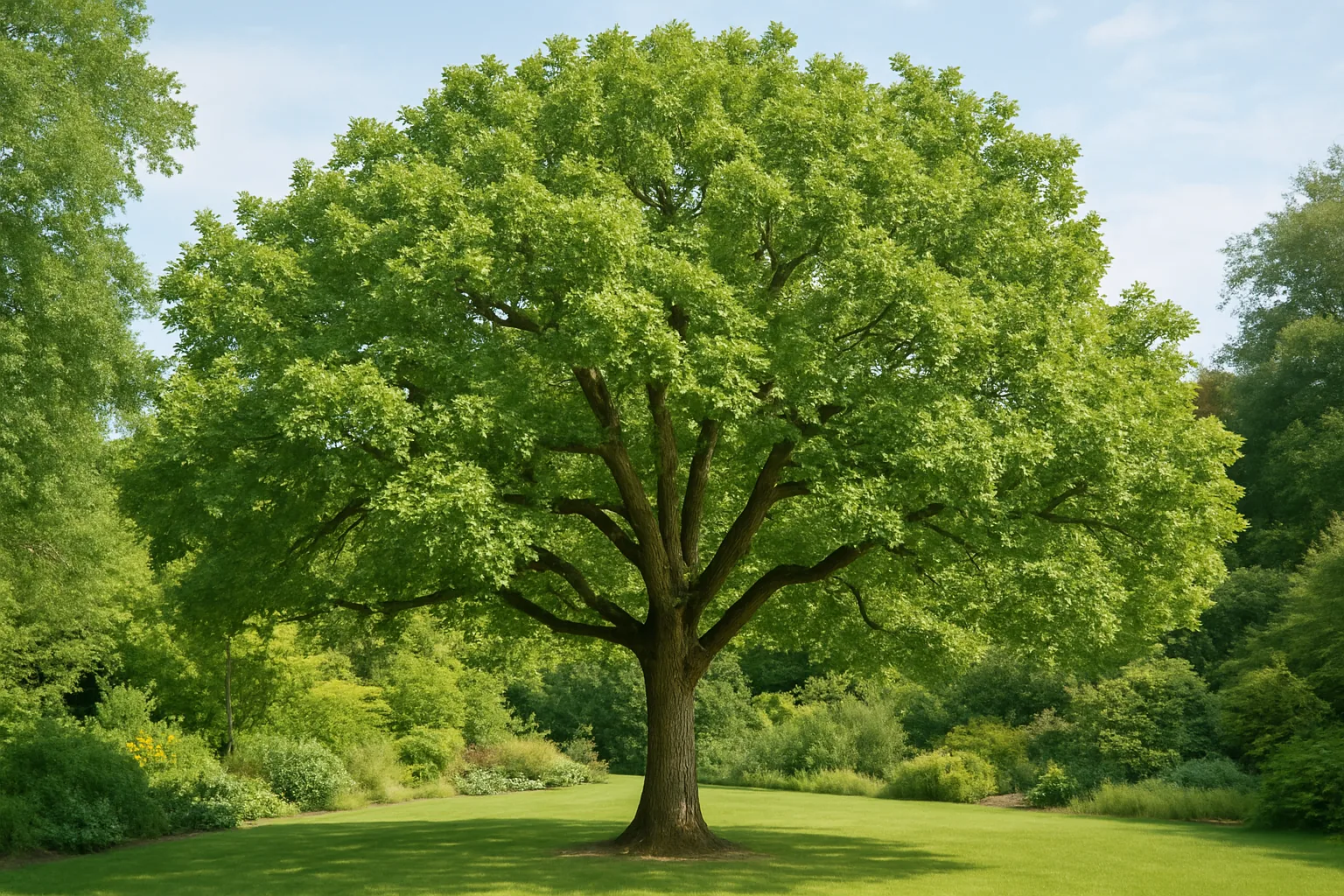
Oaks, from the genus *Quercus*, are robust trees cherished for their longevity, shade, and wildlife support. Popular in landscapes, they thrive in well-drained soil and full sun.
Overview
Oak trees, known scientifically as *Quercus*, can be either deciduous or evergreen. They are valued for their strength, long lifespan, and distinct lobed leaves. Gardeners often choose oaks to provide shade, support wildlife, and enhance the aesthetic appeal of their landscapes.
Quick Care Facts
| Sun Needs | Soil Type | Watering Needs | Mature Size | Bloom/Harvest Time | Hardiness Zone | Indoor/Outdoor |
|---|---|---|---|---|---|---|
| Full sun | Well-drained | Low | 15–25 m | Spring | 3–9 | Outdoor |
Growing Instructions
- When and Where to Plant: Plant oaks in early spring or fall. Choose a site with full sun and well-drained soil.
- How to Plant: Dig a hole twice the width and depth of the root ball. Position the tree so the root flare is at ground level, then backfill with soil.
- Spacing: Space trees 9–12 meters apart to allow for mature growth.
- Watering: Water young trees regularly until established. Mature oaks need less frequent watering.
- Fertilizing: Apply a balanced fertilizer in early spring if necessary.
- Pruning: Prune in late winter to remove dead or diseased branches and to shape the tree.
- Seasonal Care: Mulch to conserve moisture and control weeds.
Problems & Solutions
- Yellow Leaves: Likely due to nutrient deficiencies; test soil and amend as needed.
- Pests: Oak leaf miners and caterpillars are common; manage with insecticides or natural predators.
- Diseases: Oak wilt and powdery mildew can occur; ensure air circulation and apply fungicides when needed.
- Wilting: Could be root rot or drought stress; improve drainage or adjust watering.
- No Flowers: Ensure adequate sunlight and proper care.
- Root Rot: Avoid overwatering and ensure proper drainage.