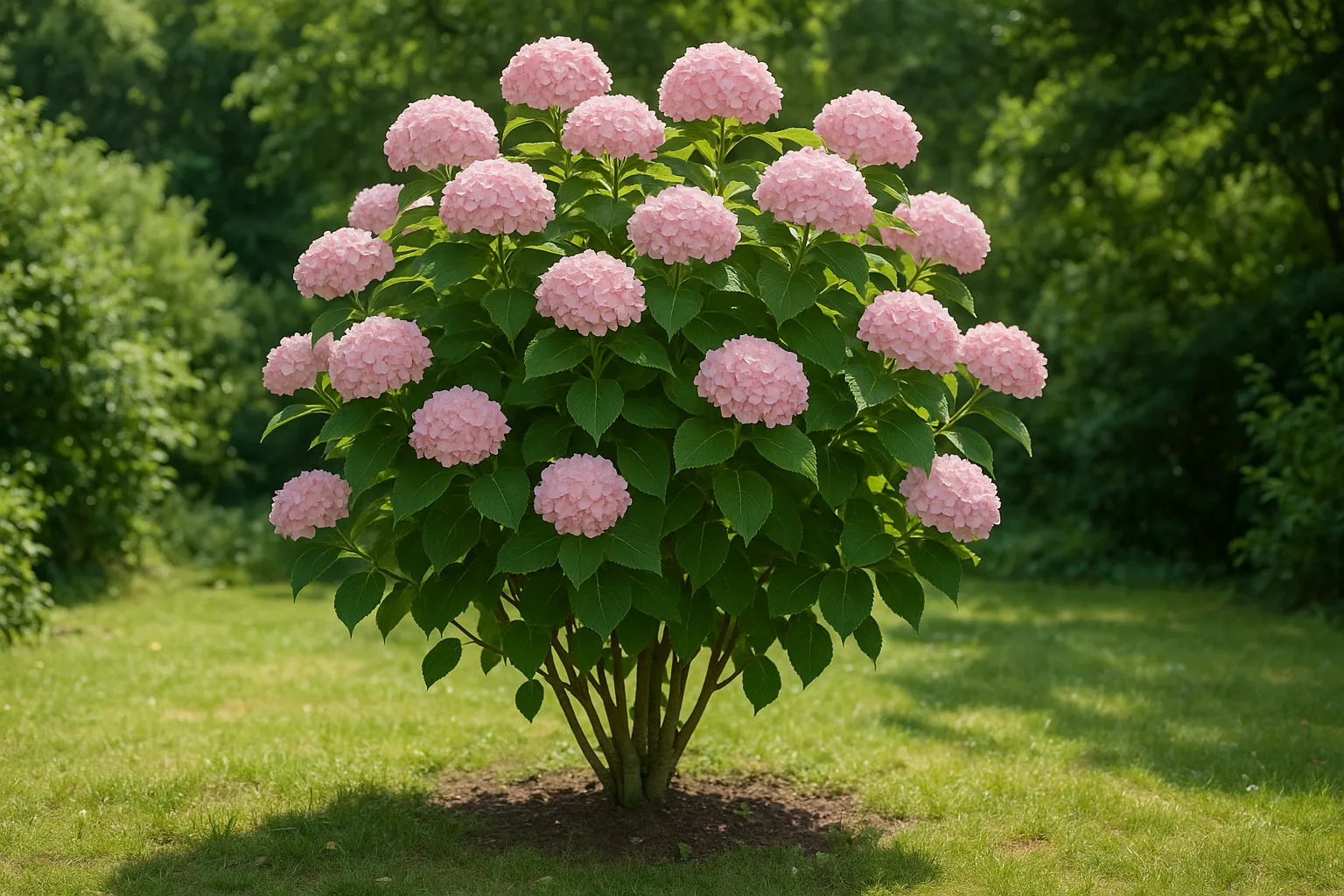
Hydrangeas are versatile shrubs known for their large, colorful blooms and lush foliage, making them a popular choice for adding beauty to any garden landscape.
Overview
Common Name: Hydrangea
Botanical Name: Hydrangea spp.
Plant Type: Shrub
Main Features: Large, colorful blooms; lush foliage
Why Grow It: Hydrangeas are favored for their stunning flowers and versatility in garden design, adding beauty and color to any landscape.
Quick Care Facts
| Sun Needs | Soil Type | Watering Needs | Mature Size | Bloom Time | Hardiness Zone | Indoor/Outdoor |
|---|---|---|---|---|---|---|
| Partial Shade | Well-drained | Regular | 1–2 m | Summer | 3–8 | Outdoor |
Growing Instructions
When and Where to Plant: Plant hydrangeas in spring or fall in a location with morning sun and afternoon shade.
How to Plant: Dig a hole twice as wide as the root ball and as deep as the root system. Place the plant in the hole, backfill with soil, and water thoroughly.
Spacing: Space plants 1 to 2 meters apart to allow for growth and airflow.
Watering: Water deeply once a week, increasing frequency during hot, dry periods.
Fertilizing: Apply a balanced, slow-release fertilizer in spring and mid-summer.
Pruning: Prune dead or damaged branches in late winter or early spring. For certain varieties, prune after blooming to shape the plant.
Seasonal Care: Mulch in winter to protect roots in colder climates.
Problems & Solutions
Yellow Leaves: Often due to overwatering or poor drainage. Improve soil drainage and reduce watering frequency.
Pests: Aphids and spider mites can be controlled with insecticidal soap or neem oil.
Diseases: Powdery mildew and leaf spot can be treated with fungicide and improved air circulation.
Wilting: Usually a sign of underwatering; increase watering frequency.
No Flowers: May be due to improper pruning or insufficient sunlight; ensure correct pruning time and adequate light.
Root Rot: Caused by overly wet soil; improve drainage and reduce watering.