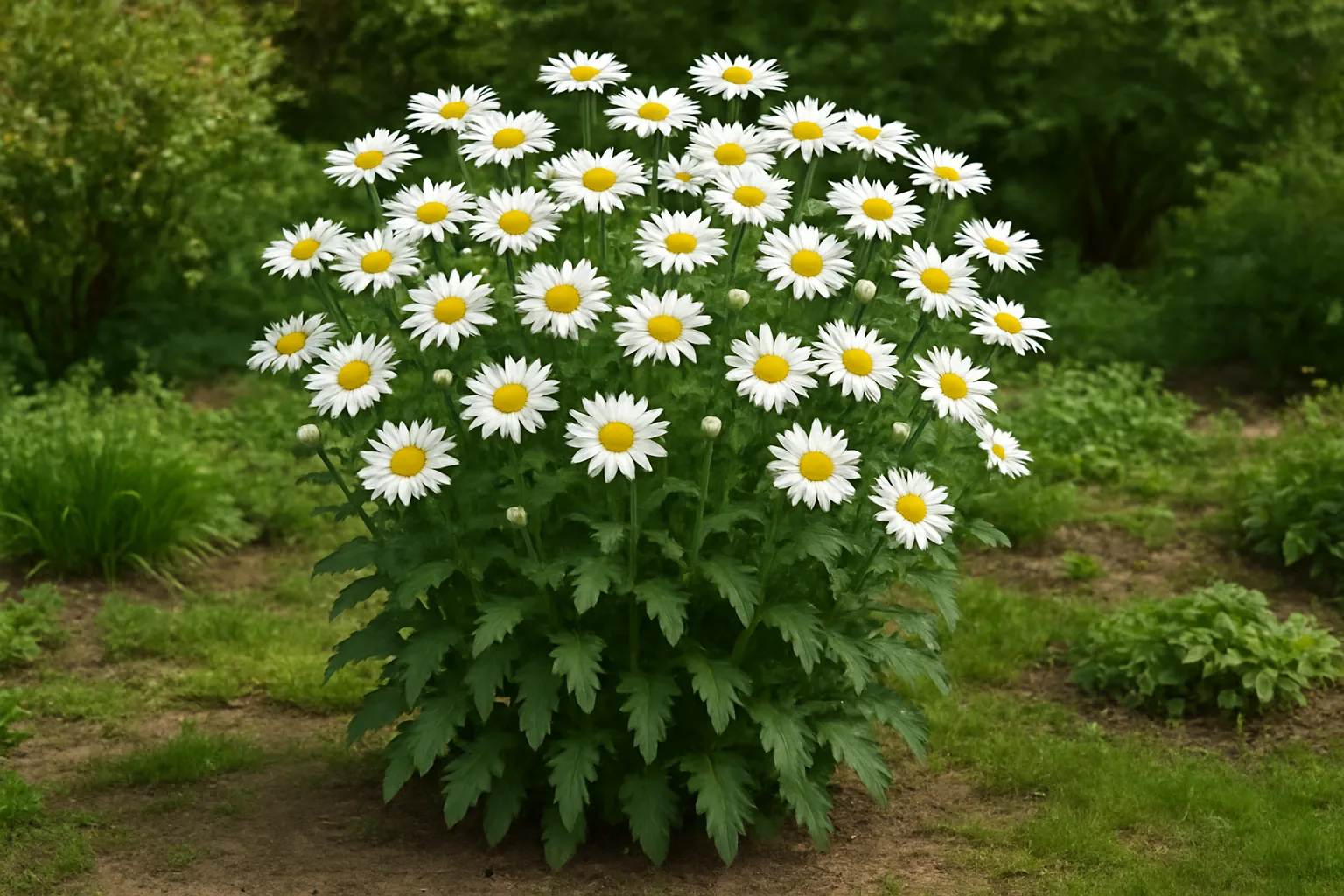
The Shasta Daisy, *Leucanthemum × superbum*, is a popular perennial known for its white petals and yellow centers, thriving in full sun and well-drained soil.
Overview
The Shasta Daisy is a perennial flower celebrated for its classic appearance and ease of care. With its bright white petals surrounding a cheerful yellow center, it attracts pollinators like bees and butterflies, making it a favorite among gardeners.
Quick Care Facts
| Sun Needs | Soil Type | Watering Needs | Mature Size | Bloom Time | Hardiness Zone | Placement |
|---|---|---|---|---|---|---|
| Full sun | Well-drained | Moderate | 0.6–0.9 m | Summer | 4–9 | Outdoor only |
Growing Instructions
- When to Plant: Plant Shasta Daisies in spring after the last frost or in early autumn.
- Where to Plant: Choose a location with full sun and well-drained soil.
- How to Plant: Dig a hole twice the width of the root ball and as deep as the container. Place the plant in the hole, fill with soil, and water thoroughly.
- Spacing: Space plants 30–60 cm apart to allow for air circulation.
- Watering: Water regularly, allowing the soil to dry slightly between waterings.
- Fertilizing: Apply a balanced fertilizer in early spring.
- Pruning: Deadhead spent flowers to encourage more blooms. Cut back foliage in late autumn.
- Seasonal Care: Mulch in winter to protect roots in colder zones.
Problems & Solutions
- Yellow Leaves: Often due to overwatering. Ensure soil drains well and reduce watering.
- Pests: Aphids and slugs can be controlled with insecticidal soap or slug traps.
- Diseases: Powdery mildew can be prevented by ensuring good air circulation and avoiding overhead watering.
- Wilting: Check for root rot and improve drainage if necessary.
- No Flowers: Ensure the plant gets enough sunlight and is not over-fertilized with nitrogen.
- Root Rot: Improve drainage and avoid waterlogged soil.
Häufig gestellte Fragen
1. Wie oft sollte ich meine Shasta-Gänseblümchen gießen?
- Gießen Sie regelmäßig, lassen Sie die Erde jedoch zwischen den Wassergaben leicht antrocknen.
2. Wann blühen Shasta-Gänseblümchen?
- Sie blühen im Sommer.
3. Wie kann ich Schädlinge an meinen Shasta-Gänseblümchen bekämpfen?
- Verwenden Sie Insektizidseife oder Schneckenfallen, um Schädlinge wie Blattläuse und Schnecken zu kontrollieren.
4. Warum werden die Blätter meiner Shasta-Gänseblümchen gelb?
- Gelbe Blätter können auf Überwässerung hinweisen. Stellen Sie sicher, dass der Boden gut abfließt und reduzieren Sie die Bewässerung.
5. Kann ich Shasta-Gänseblümchen drinnen anbauen?
- Sie sind am besten für den Außenbereich geeignet, da sie volle Sonne benötigen.